Alternative Provision
Specialist Forest School Alternative Provision.
Nature of Learning provides bespoke Alternative Provision delivered through an authentic Forest School approach.
We support children aged 5–13 who may struggle to access group environments due to autism, ADHD, sensory processing differences, learning differences, significant anxiety, trauma-related needs or demand-avoidant presentations. Many require enhanced adult ratios in order to participate safely and successfully in outdoor environments.

Recognised by the Forest School Association
Nature of Learning Forest School is recognised by the Forest School Association (FSA), the professional body for Forest School in the UK, under its Recognised Forest School Provider Scheme.
The scheme is a benchmarking and development tool that sets a professional standard for Forest School provision. It recognises individuals and settings who provide Forest School experiences in line with all six core Forest School principles. Our team also includes a Forest School Association Endorsed Trainer, reflecting the depth of professional expertise within the organisation.
Our Forest School practice is underpinned by nationally recognised principles of long-term, learner-led, relationship-centred outdoor education. Learn more about our Forest School ethos →


.png)
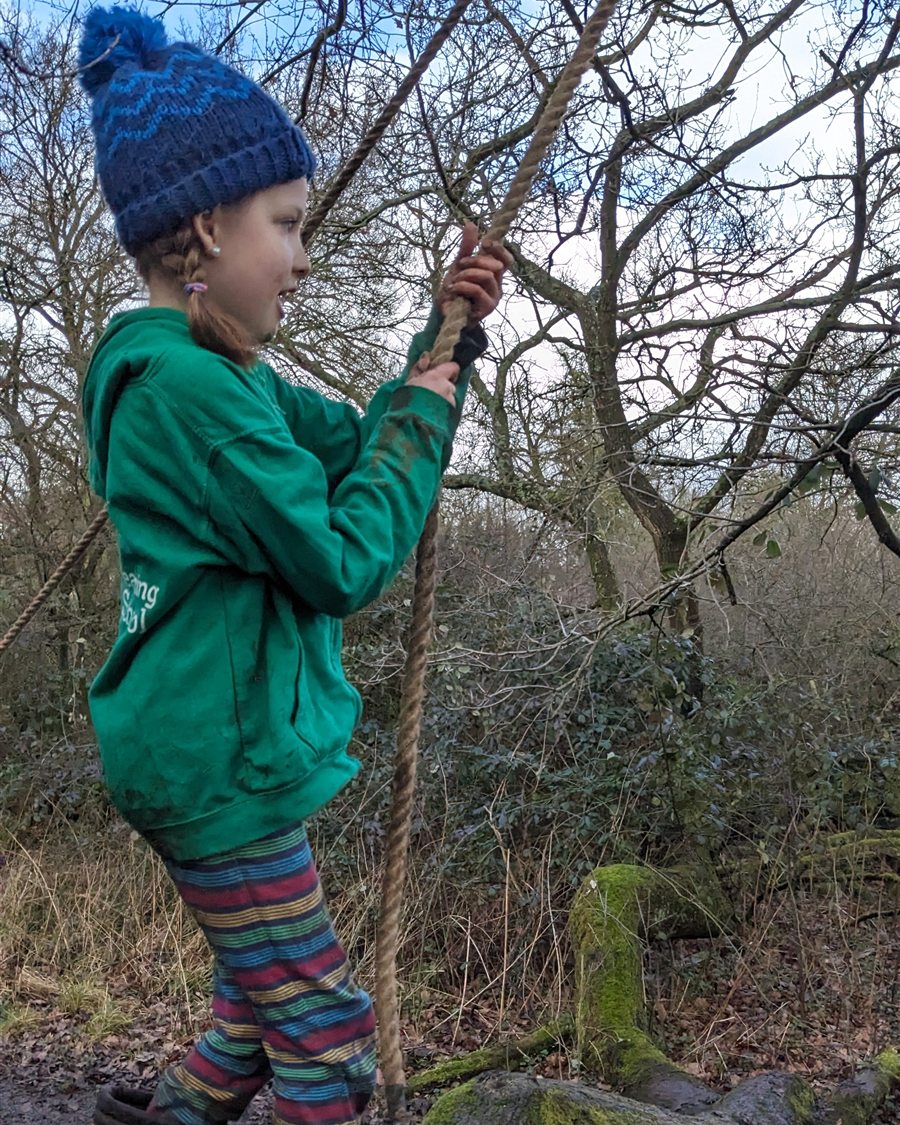
A calm, low-arousal woodland setting
Forest School offers a low-arousal, nature-based setting that can feel less overwhelming than busy indoor spaces. Our woodland site in Ashdon, Essex, provides a calm and spacious environment where, through consistent and skilled facilitation, children experience belonging, responsibility and connection over time.
Children build mastery through real responsibility, safely using tools, tending the fire circle, exploring the stream, building structures and taking stewardship of the woodland space.
The natural world offers connection beyond performance. Through steady, skilled, and trusted adult relationships, children are supported in building confidence and developing social connections at a pace that respects their individual needs.

At a glance
- Ages 5–13
- 1:1 or 2:1 Forest School provision
- Suitable for children with an EHCP, and those who have experienced EBSA, SEMH or anxiety. Experienced in supporting children with autism and ADHD, as well as sensory processing differences and demand-avoidant presentations
- Commissioned by schools and Local Authorities across Essex, Cambridgeshire and Suffolk
- Where commissioned by a school, pupils remain on that school’s roll
- Spot purchase (invoiced in arrears)
- Half-termly written reports linked to EHCP outcomes
- Transport arranged via commissioning agreement
- Session times: Monday & Thursday 10:00–2:30, Friday 12:00–2:30
Access information for:
What Forest School looks like in practice ▼
Sessions follow a consistent rhythm, with an opening and closing circle around the fire to create shared community, reflection and clear boundaries.
Within that steady framework, children explore at their own pace. Activities are child-led and autonomy-based, with skilled adult facilitation that scaffolds social development, tool competence and emotional regulation.
Our woodland site includes a natural stream, a fire circle, and established areas for exploration, gathering, and long-term projects. Children return weekly, building familiarity with place and noticing seasonal change over time.
In the woodland, this may include:
- Supported tool use and woodcraft, including preparing and cutting wood for the fire
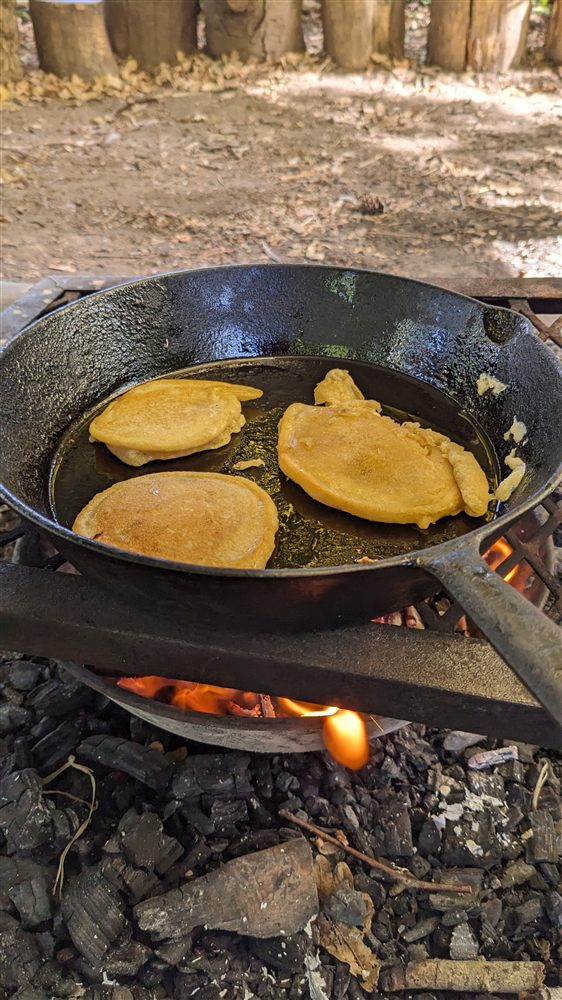
- Fire lighting and outdoor cooking within agreed safety boundaries
- Den building, rope work and collaborative problem-solving
- Seasonal craft invitations rooted in the changing woodland year
- Following curiosity — observing wildlife, setting trail cameras and tracking footprints
- Exploring the stream and responding to seasonal changes in the woodland
- Hammocks and quiet spaces for regulation and withdrawal when needed
- Stewardship of shared woodland spaces and natural materials

Provision is intentionally low-arousal and low-demand, with careful attention to sensory load, movement needs and relational safety. We recognise that children experience the world differently and adapt the environment, pacing and adult responses accordingly. Adults use calm, declarative language and model co-regulation within steady, trusted relationships.
Our practice is trauma-informed. We recognise that behaviour is communication and that some children may present with attachment disruption, high anxiety or stress responses. Predictable rhythm, careful pacing and consistent adult relationships are central to how we work.
Mastery grows through practice and trust, not pressure.
How inclusion is supported ▶
Dedicated 1:1 or 2:1 support enables children not only to attend safely, but to participate meaningfully within the wider Forest School community.
Our Forest School practice is grounded in relational, regulation-aware pedagogy. We recognise how children’s nervous systems influence behaviour and participation. The consistent presence of a skilled and trusted adult:
- Supports emotional regulation and co-regulation
- Recognises stress responses and adapts pacing accordingly
- Interprets and bridges communication differences
- Adapts to individual sensory differences and movement needs
- Reduces social pressure and demand
- Dynamically manages risk so children can safely access tools, fire, water and woodland exploration, supported by individual risk-reduction planning where appropriate
Transitions are carefully supported, recognising that arrival, separation and change can be particularly challenging for some children. Where needed, parents or trusted adults may be involved in settling-in processes to ensure emotional safety and gradual separation.
Connection is fostered at each child’s pace. Social participation is never forced. Children are supported to be accepted as their authentic selves while gradually building confidence within a shared environment.
How is provision accessed?
We welcome early discussion to determine suitability and ensure the provision is an appropriate match.
Provision may be commissioned as:
- Reduced timetable support
- Reintegration placement
- Complementary Alternative Provision
- Commissioned as part of Section 19 interim arrangements (where applicable)
Key Information
- Child remains on roll
- School retains statutory responsibility
- 1:1 or 2:1 staffing ratios
- Half-termly written report linked to agreed outcomes
- Provision invoiced in arrears
Commissioning Process
- Initial suitability discussion
- Referral information shared
- Funding route confirmed
- Planning meeting and individual risk assessment
- Start date agreed
- Review at the end of the agreed placement period
For an initial discussion regarding suitability, availability or commissioning routes, please contact
Sarah Allington, Director and Lead Practitioner
sarah@natureoflearning.co.uk
Nature of Learning provides commissioned Alternative Provision placements for children who are unable to access suitable full-time mainstream education due to anxiety, EBSA, SEMH needs, sensory processing differences or demand-avoidant presentations.
Provision can form part of a Local Authority’s arrangements to secure suitable education where children are unable to access mainstream settings.
Placements may be commissioned under:
- Section 19 arrangements (where applicable)
- EOTAS
- Interim stabilisation pending longer-term placement
- EHCP-funded packages
Provision is delivered within a small, consistent woodland-based group setting, with individualised 1:1 or 2:1 staffing as agreed at commissioning.
Each placement includes:
- Pre-placement consultation and review of EHCP documentation (where applicable)
- Individual risk assessment and risk-reduction planning
- Clear and agreed attendance pattern
- Written reports aligned to agreed outcomes
- Contribution to Annual Review processes
- Agreed review cycle with named caseworker
Invoices are issued in arrears to the commissioning authority.
Nature of Learning has met Local Authority provider framework standards and is available for spot-purchase commissioning where appropriate.
For commissioning discussions, capacity enquiries or framework-related queries, please contact
Sarah Allington, Director and Lead Practitioner
sarah@natureoflearning.co.uk
Parents are welcome to make an initial enquiry.
Provision may be accessed via:
- School-funded placement
- Local Authority commission
- EHCP funding
- Direct parent funding (subject to availability)
Funding agreements must be confirmed prior to placement start.
We understand that navigating funding and commissioning can feel complex. We are happy to outline the process and explain how placements are typically commissioned.
Parents may request a discussion or book a visit to explore suitability.
For enquiries, please contact
Sarah Allington, Director and Lead Practitioner
sarah@natureoflearning.co.uk
How is risk managed? ▶
Prior to placement:
- Review of EHCP and relevant documentation (where applicable)
- Planning discussion with the commissioning body
- Identification of known risk factors and support needs
- Agreement of attendance pattern and communication pathway
Each child has an Individual Risk Reduction Plan, which may include:
- Identified triggers and early stress indicators
- Environmental and relational adjustments
- Clear and agreed safety boundaries
- Agreed escalation procedures
- Absconding protocol (where relevant)
- Defined communication pathway between the provider and the commissioner
Dynamic risk assessment is ongoing throughout each session.
All staff hold enhanced DBS clearance and appropriate safeguarding training.
Safeguarding & governance ▶
Nature of Learning maintains clear safeguarding and governance arrangements.
- All staff hold enhanced DBS clearance
- A Designated Safeguarding Lead is in place
- Practitioners are First Aid trained
- Written safeguarding and health & safety policies are in operation
- Ongoing communication is maintained with the commissioning body
Schools commissioning Alternative Provision retain safeguarding oversight in line with statutory guidance.
Provision is led by qualified Level 3 Forest School Leaders with significant experience supporting children with SEND, including autism, ADHD, sensory processing differences and demand-avoidant presentations.
The team engage in ongoing professional development to ensure that practice reflects current research, lived experience, and an evolving understanding of SEND and trauma-informed practice.
Safeguarding and health & safety policies are available on request.
Nature of Learning has been commissioned via spot purchase by Cambridgeshire, Suffolk and Essex Local Authorities.
Contact Sarah
To discuss suitability or arrange a visit:
sarah@natureoflearning.co.uk | 07944 164 983
Visits are by prior arrangement and booking.